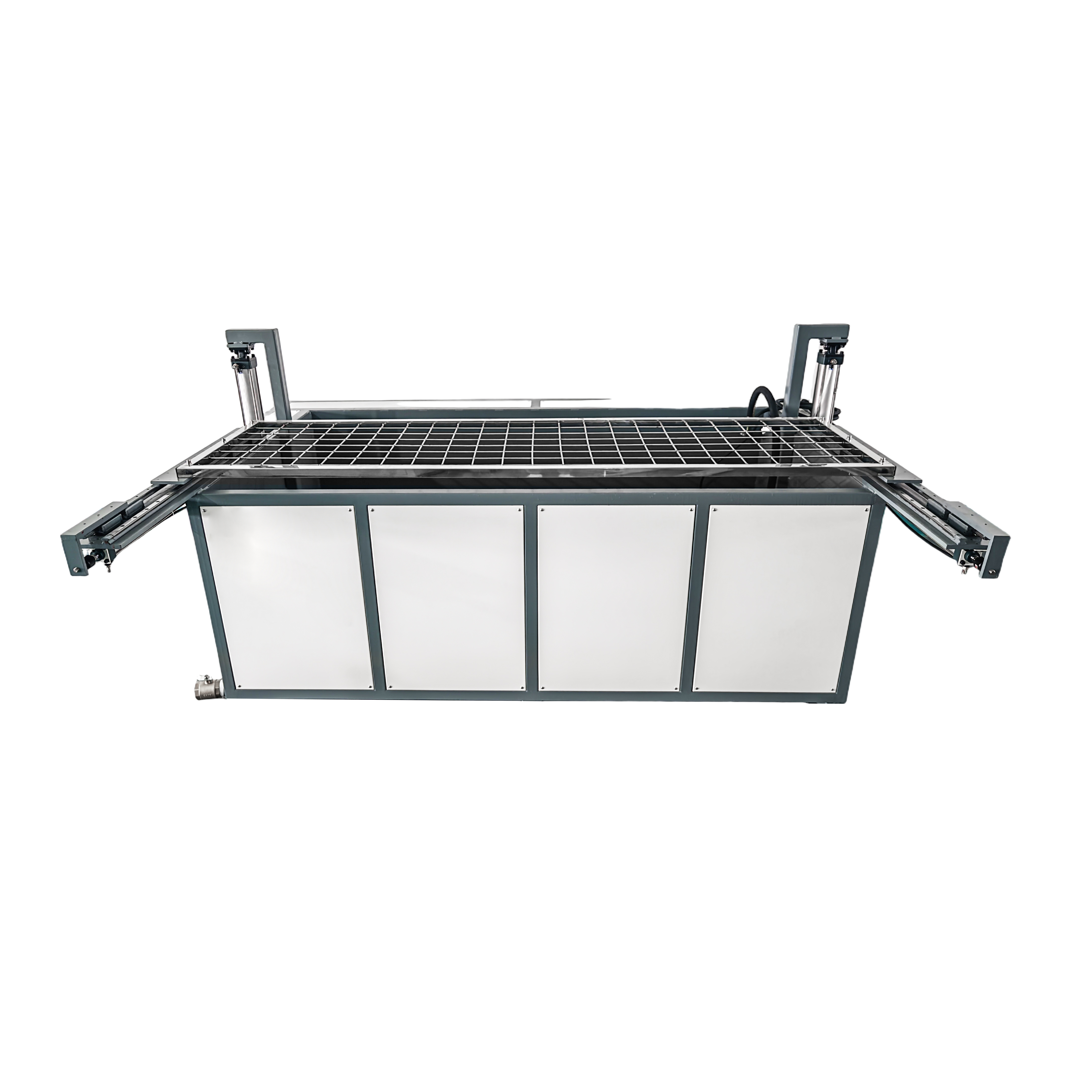
Working on the factory floor, you quickly learn that cylinder leaks are never just minor operational hiccups. They are severe safety hazards waiting to trigger catastrophic consequences. A microscopic fissure in a high-pressure vessel can lead to sudden asphyxiation, explosive decompression, or toxic exposure right on the assembly line. Beyond the immediate threat to your crew, letting a defective batch slip through the doors triggers massive product recalls. It shatters consumer trust and invites crippling regulatory fines from governing bodies.
Historically, plant managers relied on manual leak testing. We would submerge pressurized tanks into massive water baths and watch for bubbles. These outdated processes are notoriously slow and highly prone to subjective human error. Picture an operator staring at a bubbling wet tank for six straight hours. Fatigue inevitably sets in. They miss tiny leaks. Furthermore, this wet testing creates massive bottlenecks in modern, high-volume production schedules.
The definitive solution to these industrial bottlenecks is advanced pneumatic testing technology. Upgrading to a high-efficiency 8-station model serves as the ultimate fix for contemporary cylinder manufacturing and strict DOT or EPA compliance. This technical guide breaks down exactly how these automated systems operate on the floor. We will explore the distinct operational advantages they bring to your facility and why upgrading is a highly strategic financial investment.
Key Takeaways
Safety First: Leaking cylinders pose severe environmental and workplace hazards. Automated testing ensures absolute compliance with stringent international safety standards.
Maximum Efficiency: An 8-station setup allows operators to test multiple cylinders simultaneously. This drastically reduces cycle times and eliminates upstream production bottlenecks.
High Precision: Modern air leak testing relies on advanced transducers detecting micro-leaks that remain completely invisible to the naked eye.
Cost Reduction: Automating the quality control process minimizes labor costs, reduces scrap rates, and delivers a rapid return on investment.
The Hidden Dangers of Cylinder Leaks
Workplace and Consumer Safety Hazards
Leaking gas cylinders present immediate risks to both the facility workers handling the products and the end-users relying on them. Depending on the enclosed gas, a slow micro-leak can silently displace oxygen in poorly ventilated spaces. This creates a deadly asphyxiation hazard. Alternatively, flammable gases like propane can pool in enclosed areas. This transforms a minor leak into a highly volatile environment where a single spark triggers an explosion. Ensuring absolute structural integrity is non-negotiable.
Regulatory and Environmental Compliance
Industrial manufacturing operates under an increasingly watchful eye. Regulatory bodies worldwide mandate rigorous leak-proofing standards for pressurized vessels. Non-compliance frequently results in heavy financial penalties, mandatory operational shutdowns, and severe legal liabilities. Implementing an automated Air Tightness Testing Machine provides the documented, objective proof required to satisfy these stringent industry audits seamlessly.
The Financial Cost of Defective Cylinders
Beyond regulatory fines, undetected leaks lead to crippling financial losses. When a defective batch reaches the market, expensive product recalls destroy a brand reputation. The loss of raw materials, wasted production time, and the logistical nightmare associated with replacing defective units will severely impact your bottom line. Catching these structural flaws before they leave the loading dock is critical.
What is an Air Tightness Testing Machine?
Defining the Technology
Moving beyond traditional methods requires smart engineering. A modern automated industrial system is engineered to detect leaks by measuring minute air pressure changes inside a sealed component. Instead of relying on visual cues, these robust machines use highly sensitive pressure transducers and Programmable Logic Controllers to quantify leak rates accurately. By injecting compressed air into the cylinder and monitoring the internal environment, the system ensures every single product meets exact engineering specifications.
Traditional vs. Modern Testing
For decades, operators relied on water bath testing. This involved manually clamping a cylinder, submerging it in a tank of water, and visually inspecting the surface for rising bubbles. This method is highly subjective and messy. It also requires operators to wipe down dripping wet steel tanks, increasing the risk of flash rust. In stark contrast, automated air testing is completely dry and highly accurate. It replaces the guesswork of human eyesight with the undeniable precision of digital sensor data.
How an 8-Station System Operates on the Floor
The Multi-Station Advantage
The architectural layout of an 8-station system is purpose-built for high-throughput manufacturing. Configured in a linear setup, this machine allows operators to load, seal, pressurize, and test eight separate cylinders simultaneously. By parallelizing the testing phase, this robust configuration multiplies your daily production capacity exponentially without requiring extra labor shifts.
Step-by-Step Pneumatic Sequence
The operation follows a strictly controlled, multi-stage pneumatic sequence. This ensures absolute accuracy for every tested unit on the line.
Loading and Clamping: Operators place the cylinders into designated fixtures. Heavy-duty hydraulic clamps engage with a sharp hiss of pneumatics. This secures the cylinder collars and creates an airtight seal capable of withstanding high test pressures.
Pressurization: The system injects clean, dry compressed air into all eight cylinders simultaneously. Typical high-performance 8-station testing equipment will drive pressures up to 2.1 or 3.0 MPa depending on the cylinder specifications.
Stabilization and Testing: Once pressurized, the air supply isolates. The system enters a brief stabilization phase to let the internal air temperature settle. Highly sensitive sensors then monitor the internal environment for pressure decay over a specific time frame.
Exhaust and Unloading: After the test cycle concludes, the machine exhausts the compressed air safely. The PLC automatically sorts the data, flashing green for passed units and red for failures. The clamps then release for rapid unloading.
Industry Trends: The Shift Toward Smart Leak Detection
Looking at current manufacturing trends, there is a massive industry-wide shift toward Industry 4.0 integration. Driven by increasingly stringent global emissions standards and a zero-tolerance policy for workplace accidents, plant managers are rapidly abandoning manual inspection methods. Today's market demands complete traceability. Modern factories require testing equipment that not only detects micro-leaks but also uploads real-time pass and fail data directly to centralized ERP systems. The 8-station automated setup perfectly aligns with this trend. It bridges the gap between high-speed mass production and uncompromising, data-driven quality assurance.
Top Benefits of Upgrading Your Testing Line
Unmatched Production Throughput
In high-volume manufacturing, quality testing is frequently the primary bottleneck. Testing one cylinder at a time creates a massive backlog. By processing eight units concurrently, a pneumatic leak detection system dramatically reduces per-unit cycle times. Consequently, your testing department can easily keep pace with rapid upstream assembly lines.
Enhanced Accuracy and Data Tracking
Human error is completely removed from the quality control equation. Advanced PLC systems provide exact digital readouts down to fractions of a Pascal. These intelligent systems automatically log historical data for every tested batch. This traceability is crucial for quality control audits and warranty claims.
Clean and Dry Testing Environment
Water testing introduces moisture. Moisture is the natural enemy of steel. Cylinders exposed to water are highly susceptible to internal oxidation if not thoroughly dried. Air testing leaves the cylinders completely dry and pristine. This eliminates the need for energy-intensive drying ovens and allows the products to move immediately to the painting stages.
Core Testing Methods Compared
Pressure Decay Testing
This is the most prevalent and reliable method for rigid cylinder testing. The machine pressurizes the cylinder, isolates it from the air source, and monitors the internal pressure over a set time. Even a microscopic drop in pressure indicates air is escaping. It is highly cost-effective and ideal for standard fire extinguishers and industrial gas tanks.
Mass Flow Testing
Instead of measuring a pressure drop, mass flow testing measures the exact volume of air required to maintain a constant pressure inside the cylinder. Once the target pressure is reached, the system replenishes any escaping air. The flow meter records the precise amount being added. This is particularly effective for larger volumes where specific volumetric leak rate quantifications are necessary.
Performance Comparison Table
To clearly understand the operational leap, review this direct comparison between testing methodologies commonly found on the factory floor.
Feature
Traditional Water Bath
Single-Station Air Test
8-Station Air Test
Throughput
Very Low
Medium
Extremely High
Accuracy
Subjective visual inspection
High digital precision
High digital precision
Moisture Risk
High risk of rust
None completely dry
None completely dry
Labor Intensity
High manual effort
Medium
Low automated process
Data Traceability
Manual logbooks
PLC data logging
Advanced ERP integration
External Factors That Affect Air Leak Testing
Temperature Fluctuations
Air leak testing is governed by the principles of thermodynamics. According to Charles's Law, gas pressure changes proportionally with temperature. If a cylinder arrives at the testing station warm from a previous welding process, the air inside will cool during the test. This causes a natural pressure drop that mimics a leak. To counteract this, modern machines incorporate advanced temperature compensation algorithms within the PLC.
Part Volume and Deformation
When high pressure is applied to a hollow metal cylinder, the material can slightly expand. This sudden increase in internal volume causes a temporary pressure drop. If ignored, the machine might interpret this volumetric expansion as a failure. Implementing a proper stabilization period before the actual measurement phase allows the metal to fully expand and the air to settle.
Seal Quality and Maintenance
The accuracy of any pneumatic test is entirely dependent on the integrity of the machine seals. Worn O-rings or degraded clamping mechanisms will cause air to escape from the testing apparatus itself. This results in a false failure for a perfectly good cylinder. Establishing a strict preventative maintenance schedule to regularly inspect polyurethane seals is essential for consistent testing accuracy.
Actionable Selection Guide: Is an 8-Station System Right for You?
The decision to upgrade depends heavily on your daily output requirements and specific product parameters. A premium multi-station air tightness tester offers incredible ROI, but you must match the machine to your floor's reality.
Assess Production Volume: If your facility processes under 300 cylinders a day, a single or double-station machine may suffice. If your output scales into the thousands, a single-station machine will inevitably cause severe delays. The parallel processing of an 8-station setup is mandatory to meet high quotas efficiently.
Verify Cylinder Dimensions: Look for machines with adjustable fixtures. High-quality systems can typically handle cylinder diameters ranging from 90mm to 160mm and heights up to 600mm, allowing you to test various SKUs on the same line.
Check Pressure Requirements: Ensure the machine's pneumatic output matches your safety standards. Standard fire extinguisher testing often requires stable test pressures between 1.2 MPa and 2.1 MPa. The clamping mechanism must exert enough force to maintain an absolute seal against these internal pressures.
Conclusion
Cylinder leaks are not an issue that manufacturers can afford to overlook. They cause severe safety hazards, invite regulatory penalties, and result in devastating financial losses. Upgrading to automated testing prevents these dangerous issues from ever reaching the consumer. By processing multiple parts simultaneously, an 8-station machine offers unmatched speed and accuracy, completely eliminating the bottlenecks associated with traditional water baths.
Investing in reliable, high-precision equipment is a fundamental commitment to protecting your end-users, optimizing your workforce, and securing the long-term future of your business in a competitive industrial landscape.
Do not let outdated testing methods slow down your assembly line or compromise your product quality. It is time to implement modern solutions tailored to your production demands. Visit ZW Fire Safe today to explore detailed technical specifications, review automated equipment options, and secure a customized testing solution that fits your exact manufacturing requirements.
FAQ
How accurate is an automated testing machine compared to a water bath?
Digital sensors detect micro-leaks that water baths completely miss. Water testing relies on human observation of rising bubbles, which is highly subjective and error-prone. Automated machines use pressure decay sensors to measure pressure drops down to fractions of a Pascal, making the process significantly more accurate and reliably repeatable.
What is the standard test pressure for fire extinguisher cylinders?
Standard test pressures typically range from 1.5 to 3.0 MPa, depending on the specific type of extinguisher and local fire safety regulations. High-quality testing machines are engineered to safely deliver and hold these pressures while monitoring for minute decay.
Can an 8-station machine handle different sizes of cylinders?
Yes, most high-quality machines feature adjustable fixtures and programmable settings. Operators can easily modify the clamping mechanisms to accommodate various cylinder heights and diameters, making the equipment highly versatile for different product lines.
How long does a typical test cycle take on an 8-station machine?
A typical test cycle ranges from a few seconds to a couple of minutes, depending heavily on the cylinder internal volume and the required test pressure. Because eight parts are processed simultaneously, the effective cycle time per unit is drastically reduced.
Can automated leak testing integrate with our existing factory ERP?
Absolutely. Modern automated testing machines are equipped with advanced PLCs that feature network communication modules. This allows real-time pass and fail data, test pressures, and batch numbers to be exported directly to your centralized Manufacturing Execution System or ERP.
What maintenance is required for these testing machines?
Routine maintenance is straightforward but critical for ongoing accuracy. It includes regularly inspecting and replacing pneumatic polyurethane seals and O-rings, calibrating the pressure sensors annually, and ensuring that the facility compressed air supply remains clean and dry.
Is pressure decay testing safe for high-pressure cylinders?
Yes. These machines are explicitly designed with heavy-duty safety enclosures and robust pneumatic clamping mechanisms. They safely handle the required test pressures while protecting operators from potential blowout hazards during the active testing cycle.